

국채매입으로 금리하락 유도 베센트 정책과 상충
연준과 재무부의 엇갈린 처방, 9월 FOMC 분수령
지난 금요일 케빈 워시 미국 연방준비제도(연준) 의장은 잭슨홀 미팅에서 확고한 인플레이션 대응 의지를 강조했다. 워시 의장은 연준이 65개월 동안 2% 물가상승률 목표를 달성하지 못했다고 지적하며 인플레이션이 목표치로 확실하게 충분한 속도로 움직이고 있다는 확신을 가져야 한다고 말했다. 워시의 물가안정 강조 발언 이후 금융시장에서는 통화정책 기대에 민감하게 반응하는 2년 만기 미 국채 금리가 급등했다.
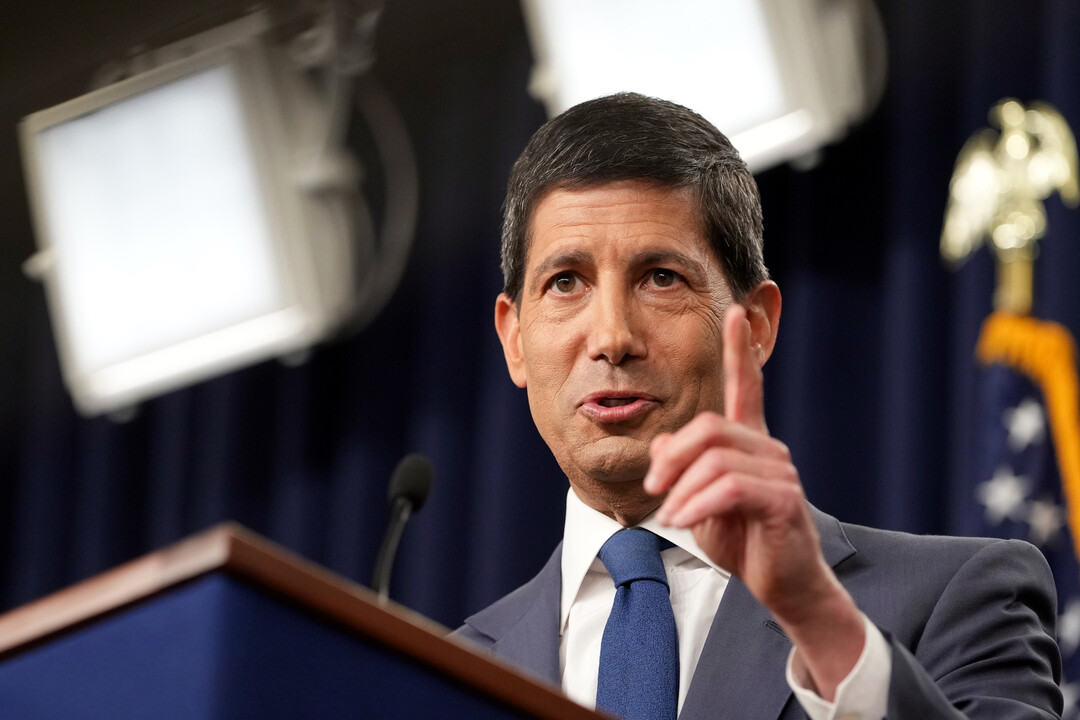 |
| ▲ 케빈 워시 미국 연방준비제도(연준) 의장. [AP 뉴시스] |
워시는 또한 포워드 가이던스(forward guidance), 즉 사전적 정책방향 제시가 그 역할을 다했다는 자신의 견해를 재차 강조했다. 포워드 가이던스는 연준과 시장이 서로에게 같은 신호를 주고받는 '거울의 방'(hall of mirrors)과 같은 현상의 위험을 초래한다고 지적했다. 워시는 2021~2022년의 정책 실수를 언급하며 당시 잘못된 포워드 가이던스로 필요한 대응이 늦어졌고 그 결과 소비자물가 상승률이 9%를 넘어섰으며 그 충격이 현재까지도 누적적인 영향을 미치고 있다고 말했다.
워시가 보기에 중앙은행이 미래의 정책 경로를 지나치게 자세하게 알려주는 것은 시장의 가격 발견 기능을 약화시킬 수 있다. 시장이 중앙은행의 신호를 읽고 그에 맞춰 움직이면 중앙은행은 다시 시장의 움직임을 보고 정책을 조정하게 된다. 중앙은행과 시장이 서로의 신호를 확인하면서 움직이는 거울의 방이 만들어지는 것이다. 워시가 포워드 가이던스를 줄이려는 이유는 바로 이 악순환을 끊고 시장이 경제의 기초여건과 위험을 스스로 가격에 반영하도록 하기 위해서다.
이러한 워시의 접근은 시장에 떠먹여 주지 않겠다(not to spoon-feed markets)는 그의 통화정책 커뮤니케이션 철학에서 비롯된다. 시장에 널리 알려진 연준의 분기별 금리 전망 보고서인 점도표(dot plot)를 워시는 제시하지 않았다. 연준이 정책금리의 미래 경로를 미리 제시하기보다 시장의 반응을 보다 직접적이고 가감 없이 지켜보겠다는 것이다. 실제로 워시는 6월과 7월 연방공개시장위원회(FOMC) 정례회의에서 정책금리 변동이 없었지만 시장금리는 명목과 실질 모두 상승했다고 말했다. 정책금리를 움직이지 않고도 시장금리의 상승을 통해 자율 긴축 효과(autonomous tightening effect)를 만들어낼 수 있다는 의미로 해석할 수 있다.
한편 이번 잭슨홀 미팅이 열리기 직전 스콧 베센트 미 재무장관은 9월부터 장기 국채 매입 규모를 두 배로 확대하겠다는 계획을 밝혔다. 이를 통해 장기 차입 비용을 낮추겠다는 것이다. 최근 장기 국채 금리 상승을 시장의 자율적 가격 발견으로 긍정적으로 평가하는 워시의 입장과는 일응 상충되는 대목이다. 한쪽에서는 시장이 장기금리를 스스로 결정하도록 내버려 두려 하고 다른 한쪽에서는 재무부가 장기금리를 낮추기 위해 국채시장에 보다 적극적으로 개입하려 하기 때문이다.
다만 재무부의 장기 국채 매입 자금은 신규 단기 국채 발행으로 조달할 예정이다. 장기 국채를 단기 국채로 전환하는 이른바 오퍼레이션 트위스트 방식이다. 장기물 공급을 줄이는 동시에 단기물 공급을 늘리는 방식으로 수익률곡선의 장단기 구성을 바꾸려는 것이다.
문제는 늘어난 단기 국채를 누가 흡수하느냐이다. 여기서 스테이블코인이 중요한 요소로 등장한다. 베센트는 장기 국채를 단기 국채로 전환하는 데 따른 수요 문제를 해결하기 위해 스테이블코인의 역할을 기대하고 있다. 이번 잭슨홀 미팅의 주요 주제 가운데 하나이기도 한 스테이블코인은 준비자산으로 단기 국채를 보유하는 구조를 통해 단기 국채 수요를 확대할 수 있다. 스테이블코인이 재무부의 단기 국채 발행 확대를 흡수하는 새로운 수요 기반으로 작용할 가능성이 있는 것이다.
그래서 9월 FOMC를 둘러싼 시장의 움직임은 하나의 정책 경로만으로 설명하기 어려워진다. 워시의 경로는 포워드 가이던스 축소 → 시장의 가격 발견 확대 → 위험 프리미엄 반영 → 시장금리 상승 → 자율적 긴축으로 이어진다. 반면 베센트의 경로는 장기 국채 매입 확대 → 장기금리 하락 압력 → 단기 국채 발행 확대 → 스테이블코인의 단기 국채 수요 확대로 이어진다. 두 경로는 서로 다른 방향으로 시장금리에 영향을 미칠 수 있다. 워시는 시장이 금리를 스스로 결정하도록 유도하고 베센트는 국채의 만기 구조를 조정해 금리에 영향을 미치려 한다.
워시가 출범시킨 통화정책 커뮤니케이션 태스크포스에도 주목할 필요가 있다. 미국·영국·브라질의 정예 중앙은행가들이 참여해 새로운 커뮤니케이션 개혁 방안을 논의하고 있다. 아직 개혁안이 완성된 단계는 아니지만 워시가 중앙은행 커뮤니케이션 자체를 통화정책의 중요한 수단으로 보고 있다는 점은 분명하다. 이러한 상황에서 베센트의 장기 국채 매입 확대 계획이 제시되고 높은 인플레이션 압력까지 지속되고 있다. 이번 잭슨홀 미팅의 워시 발언은 이러한 복합적인 정책환경 속에서 바라볼 필요가 있다.
그렇다면 시장 일각의 기대처럼 9월 FOMC에서 과연 정책금리 인상이 이루어질 것인가. 핵심은 연준의 반응 함수가 무엇이냐에 달려 있다. 인플레이션뿐만 아니라 노동시장 상황, 시장금리의 작동 등을 얼마나 고려할 것인지가 중요하다. 특히 워시의 새로운 커뮤니케이션 전략 아래에서는 정책금리와 시장금리의 관계가 달라질 수 있다. 연준이 정책금리를 올리지 않더라도 시장금리가 상승한다면 금융 여건은 긴축적일 수 있다. 재무부의 장단기 국채 오퍼레이션 트위스트와 스테이블코인의 단기 국채 수요 촉진 효과 역시 간과할 수 없다. 이는 향후 수익률곡선과 금융 여건을 살펴보는 데 관련 요소가 될 것이다.
종합적으로 9월 FOMC는 물가·고용 등 실물경제 데이터, 시장금리라는 가격, 재무부의 국채정책, 스테이블코인이라는 새로운 국채 수요 기반, 그리고 워시가 실험하고 있는 통화정책 커뮤니케이션이 반응 함수에서 어떻게 상호작용하는가가 관건이다.
워시는 중앙은행이 시장을 이끄는 시대에서 시장이 중앙은행을 검증하는 시대로의 전환을 실험하고 있다. 베센트는 국채의 만기 구조와 새로운 민간 디지털화폐를 활용해 금융시장에 영향을 미치려 한다. 중앙은행의 언어와 재무부의 국채정책, 그리고 스테이블코인의 수요가 시장에서 만나는 것이다.
워시의 '말을 줄이는 통화정책'이 시장금리를 얼마나 움직일 것인지, 그리고 베센트의 국채정책과 스테이블코인이 그 움직임을 얼마나 상쇄하거나 증폭시킬 것인지를 주시할 필요가 있다. 미 통화정책은 시장의 가격 발견과 재정·금융시장의 상호작용을 함께 읽는 국면으로 들어서고 있다.
[Reading Finance & Economy with Cho, Hong Kyoon] Kevin Warsh at Jackson Hole and the Prospect of a U.S. Rate Hike
Last Friday, Federal Reserve Chair Kevin Warsh underscored his firm commitment to combating inflation at the Jackson Hole symposium. Warsh pointed out that the Federal Reserve had failed to achieve its 2% inflation target for 65 months and stressed that the Fed must have confidence that inflation is moving to its objective clearly and at sufficient speed. Following Warsh's remarks emphasizing price stability, the two-year U.S. Treasury yield, sensitive to expectations for monetary policy, surged.
Warsh also reiterated his view that forward guidance, that is, the advance communication of the likely path of monetary policy, has run its course. He warned that forward guidance can create a hall of mirrors in which the Federal Reserve and financial markets send and receive the same signals from one another. Referring to the policy mistakes of 2021–2022, Warsh argued that misguided forward guidance delayed the necessary policy response, contributing to a surge in consumer price inflation above 9%, the cumulative effects of which are still being felt today.
In Warsh's view, providing markets with excessive detail about the future policy path can weaken their price-discovery function. If markets respond to the central bank's signals and the central bank then adjusts policy in response to market movements, a hall of mirrors emerges in which the central bank and markets continually validate one another's signals. Warsh's effort to scale back forward guidance is therefore intended to break this feedback loop and allow markets to incorporate economic fundamentals and risk into prices on their own.
This approach stems from Warsh's philosophy of monetary policy communication: not to spoon-feed markets. Warsh has not provided the Federal Reserve's widely followed quarterly dot plot of projected interest rates. Rather than pre-announcing the future path of the interest rates, he intends for the Fed to observe market reactions more directly and without excessive intervention. Indeed, Warsh noted that although the policy rate did not change at the June and July Federal Open Market Committee (FOMC) meetings, both nominal and real market interest rates increased. This can be interpreted as an attempt to generate an autonomous tightening effect through higher market interest rates without directly moving the policy rate.
Meanwhile, just before this year's Jackson Hole meeting, U.S. Treasury Secretary Scott Bessent announced plans to double the Treasury's purchases of long-term government bonds beginning in September. The objective is to lower long-term borrowing costs. This appears, at least at first glance, to conflict with Warsh's positive assessment of the recent rise in long-term Treasury yields as a sign of autonomous market price discovery. On one side, Warsh appears willing to let markets determine long-term interest rates on their own; on the other, the Treasury is seeking to intervene more actively in the government bond market to push long-term yields lower.
Meanwhile, the Treasury plans to finance its purchases of long-term bonds by issuing additional short-term Treasury securities. In effect, this resembles an operation-twist approach, shifting the maturity composition of government debt from longer-term to shorter-term securities. By reducing the supply of long-term bonds while increasing the supply of short-term securities, the Treasury seeks to alter the maturity structure of the yield curve.
The question, then, is who will absorb the additional short-term Treasury securities. This is where stablecoins become an important factor. Bessent appears to be counting on stablecoins to help address the demand implications of shifting toward greater short-term Treasury issuance. Stablecoins, one of the major subjects at this year's Jackson Hole meeting, can generate additional demand for short-term Treasury securities because issuers typically hold such securities as reserve assets. The stablecoins could therefore provide a new source of demand capable of absorbing an increase in short-term Treasury issuance.
As a result, market developments surrounding the September FOMC meeting can no longer be explained through a single policy channel. Warsh's channel runs from reduced forward guidance → greater market price discovery → incorporation of risk premia → higher market interest rates → autonomous monetary tightening. Bessent's channel, by contrast, runs from increased purchases of long-term Treasury securities → downward pressure on long-term yields → increased issuance of short-term Treasury securities → greater demand for short-term Treasuries from stablecoins. The two channels could affect market interest rates in different directions. Warsh is encouraging markets to determine interest rates more independently, while Bessent is seeking to influence interest rates by altering the maturity structure of government debt.
Attention should also be paid to the monetary policy communication task force launched by Warsh. It includes leading central bankers from the United States, the United Kingdom, and Brazil, who are working on reforms to the Federal Reserve's communication strategy. Although the reform proposals have not yet been finalized, it is clear that Warsh regards central bank communication itself as an important instrument of monetary policy. Against this backdrop, Bessent has announced an expansion of long-term Treasury purchases while inflationary pressures remain elevated. Warsh's Jackson Hole remarks therefore need to be viewed in the context of this complex policy environment.
The key question is whether, as some in the market expect, the FOMC will actually raise the policy rate in September. Much will depend on the Federal Reserve's reaction function. The crucial issue is how heavily the Fed will weigh not only inflation but also labor-market conditions and the functioning of market interest rates. Under Warsh's new communication strategy in particular, the relationship between the policy rate and market rates could change. Even if the Fed does not raise its policy rate, rising market interest rates could produce tighter financial conditions. The Treasury's maturity-management strategy and the role of stablecoins in stimulating demand for short-term Treasury securities should not be overlooked either. These factors could prove relevant to the future shape of the yield curve and broader financial conditions.
Taken together, the September FOMC decision will hinge on how several forces interact within the Federal Reserve's reaction function: real-economy data such as inflation and employment; market interest rates as a form of price discovery; Treasury debt-management policy; stablecoins as a new source of demand for government securities; and Warsh's ongoing experiment with monetary policy communication.
Warsh is experimenting with a transition from an era in which the central bank guided markets to one in which markets test and discipline the central bank. Bessent, meanwhile, seeks to influence financial markets through the maturity structure of Treasury debt and a new form of private digital money. The language of the central bank, the Treasury's debt-management policy, and demand generated by stablecoins are converging in the market.
The question to watch is how much Warsh's monetary policy of saying less will move market interest rates and how much Bessent's Treasury policy and stablecoins will offset or amplify that movement. U.S. monetary policy is entering a phase in which market-based price discovery and the interaction between fiscal policy and financial markets must be read together.
 |
| ▲ 조홍균 객원논설위원 |
●조홍균은
법·제도경제학자이자 35년 경력 중앙은행가. 경제, 금융, 기업 관련 정책과 제도를 주로 천착했다. 통화금융정책, 금융체제, 금융감독, 금융산업, 기업정책, 법경제 실무와 이론에서 전문성을 쌓았다. 중앙은행과 정부, 국제기구, 학계, 언론계 등에 걸쳐 폭넓게 이력을 쌓았다.
△ 미 워싱턴대 법학박사(J.D./J.S.D., 법경제학) △ 1989년 한국은행 입행 △ 1990년 조사제1부 조사역 △ 1999~2012년 정책기획국 과장 차장 팀장 △ 2016년 금융감독원 거시감독국 파견국장 △ 2017년 한국금융소비자학회 부회장 △ 2018년 한국금융연수원 교수 △ 2022년 경제연구원 부원장 △ 저서: 우리 시대의 금융경제 읽기(박영사, 2025년) △ 2025년~ 고려대 행정전문대학원·법무대학원 교수, 한국은행 경제연구원 객원연구위원
[저작권자ⓒ KPI뉴스. 무단전재-재배포 금지]